Postpartum Bleeding: What to Expect After Birth (Vaginal & C-Section)
Postpartum bleeding (lochia) is a normal part of recovery after both vaginal birth and C-section. It can last 4–6 weeks, gradually changing from heavy red bleeding to lighter discharge. Rest, proper support, and knowing when to seek help are key to healing well.
Postpartum bleeding can come as a surprise - even when you know it’s coming. Many women are told to expect bleeding after birth, but few are really prepared for what it looks like, how long it lasts, or how different it can feel depending on whether you’ve had a vaginal birth or a caesarean section.
This article is here to normalise it, explain what’s happening in your body, and help you feel more confident and prepared during your recovery.
What Is Postpartum Bleeding?
Postpartum bleeding is known medically as lochia. It’s your body’s way of shedding blood, tissue, and mucus from the uterus after the placenta has detached. Regardless of how your baby was born, your uterus needs time to heal — and bleeding is a normal and necessary part of that process.
Lochia usually lasts 4–6 weeks, though for some women it may be shorter or slightly longer.
The Stages of Postpartum Bleeding
Postpartum bleeding typically changes over time and moves through a few phases:
1. Lochia Rubra (Days 1–4)
Bright red blood
Heavy flow, similar to (or heavier than) a strong period
May include small clots
Heavier when standing up, breastfeeding, or moving around
This is usually the heaviest phase and I would recommend using adult nappies or diapers for this phase – less mess, more comfort.
Product Recommendations:
Budget – Sage Sanitary Care (I purchased these from Checkers)
Most comfortable – TENA Lady Pants (I purchased these at Dischem)
2. Lochia Serosa (Days 4–10)
Pinkish or brownish blood
Lighter flow
Fewer clots
I would recommend using stretchy undies and a maternity pad combination for this phase.
Product Recommendations:
PnP Clothing Stretchy Undies two sizes up
Layer 1 – Lil-Lets Maternity pad (stuck in with sticky tabs)
Layer 2 – Carriwell Maternity pad layered on top of the Lil-Lets pad
3. Lochia Alba (Weeks 2–6)
Creamy, yellowish, or white discharge
Much lighter
Spotting may come and go
I would recommend still using the stretchy undies from PnP Clothing but just having one Maternity Pad layer and the Lil-Lets maternity pads are my favourite.
No items found.
What to Expect After a Vaginal Delivery
After a vaginal birth, bleeding is often heavier in the first few days, especially if:
You had tearing or stitches
Labour was long
This is not your first baby
You may notice:
Gushes of blood when standing up
Heavier bleeding during or after breastfeeding (this is due to oxytocin causing the uterus to contract)
Soreness and swelling that make bathroom visits feel intimidating at first
This is normal but it can feel intense. The key is good support, rest, and the right products to help you feel secure.
What to Expect After a C-Section
Even though a C-section is a surgical birth, postpartum bleeding still occurs, because the placenta was attached to the uterus.
Differences you may notice:
Bleeding may be slightly lighter initially than after a vaginal birth
It can last just as long
You’re managing bleeding and surgical incision healing at the same time
Because movement is more difficult after a C-section, having easy-to-use bleeding management options is especially important.
How Heavy Is “Too Heavy”?
Some heaviness is expected, especially in the first week. However, contact your healthcare provider urgently if you experience:
Soaking a pad every hour for two hours in a row
Large clots bigger than a golf ball
A sudden return to very heavy, bright red bleeding after it had lightened
Dizziness, fainting, or feeling unwell
A foul-smelling discharge
Trust your instincts. You know your body best.
Linen Savers
Using protective pads on your bed or couch provides peace of mind and helps you relax without worrying about leaks.
A Gentle Reminder About Rest
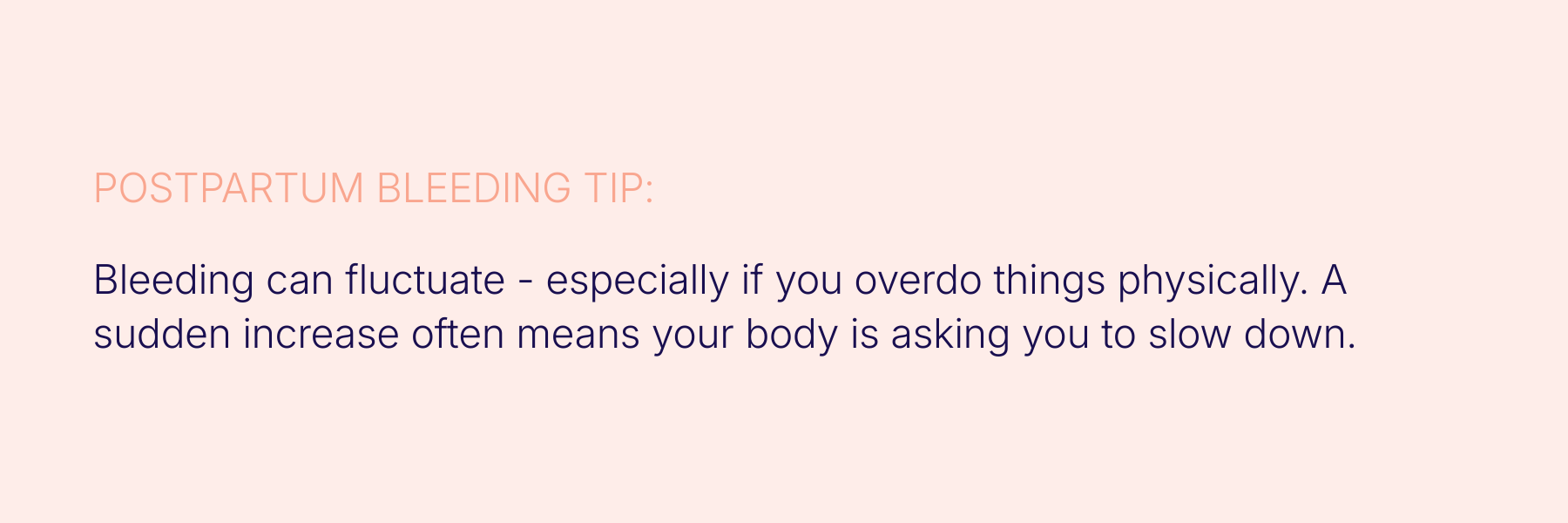
Bleeding is one of your body’s clearest signals. If it gets heavier, darker, or more persistent, it often means you’re doing too much.
Healing after birth isn’t something you push through - it’s something you allow.
Slow down. Lie down. Ask for help. Let your body close this chapter gently.
Postpartum bleeding can feel confronting, messy, and overwhelming - but it is also a sign of deep healing. Whether you’ve had a vaginal birth or a C-section, your body is doing exactly what it needs to do to recover and reset.
Prepare yourself with the right information, the right support, and compassion for yourself in this season. You are not meant to “bounce back.” You are meant to heal: fully, slowly, and in your own time.
At Raising & Rising, we believe that knowing what to expect doesn’t take away the intensity of postpartum but it does take away fear. And that matters.
No items found.
No items found.
Stay on the rise
Get empowering insights, tips, and tools in your inbox each month. No spam, just support.
Thank you! Your submission has been received!
Oops! Something went wrong while submitting the form.


.png)


.png)