Dry Cord Care vs Wet Cord Care: What Every New Mom Should Know
Umbilical cord care doesn’t have to be complicated. For many healthy newborns, keeping the cord clean, dry, and exposed to air is enough to support natural healing. Always watch for signs of infection and trust your instincts.
Those first few days with a newborn are filled with wonder, exhaustion, and a hundred tiny decisions you never knew you’d have to make. One of them is how to care for your baby’s umbilical cord stump. It might feel small, but cord care plays an important role in preventing infection and supporting healthy healing.
If you’ve heard conflicting advice about dry cord care versus wet cord care, you’re not alone. Let’s break it down simply, calmly, and without judgement so you can choose what feels right for you and your baby.
What Is Umbilical Cord Care?
After birth, your baby’s umbilical cord is clamped and cut, leaving a small stump attached to their tummy. This stump usually dries out and falls off on its own within 1–2 weeks.
The goal of cord care is simple:
Keep the area clean
Prevent infection
Allow the cord to dry and heal naturally
How we do that is where the two approaches differ.
What Is Dry Cord Care?
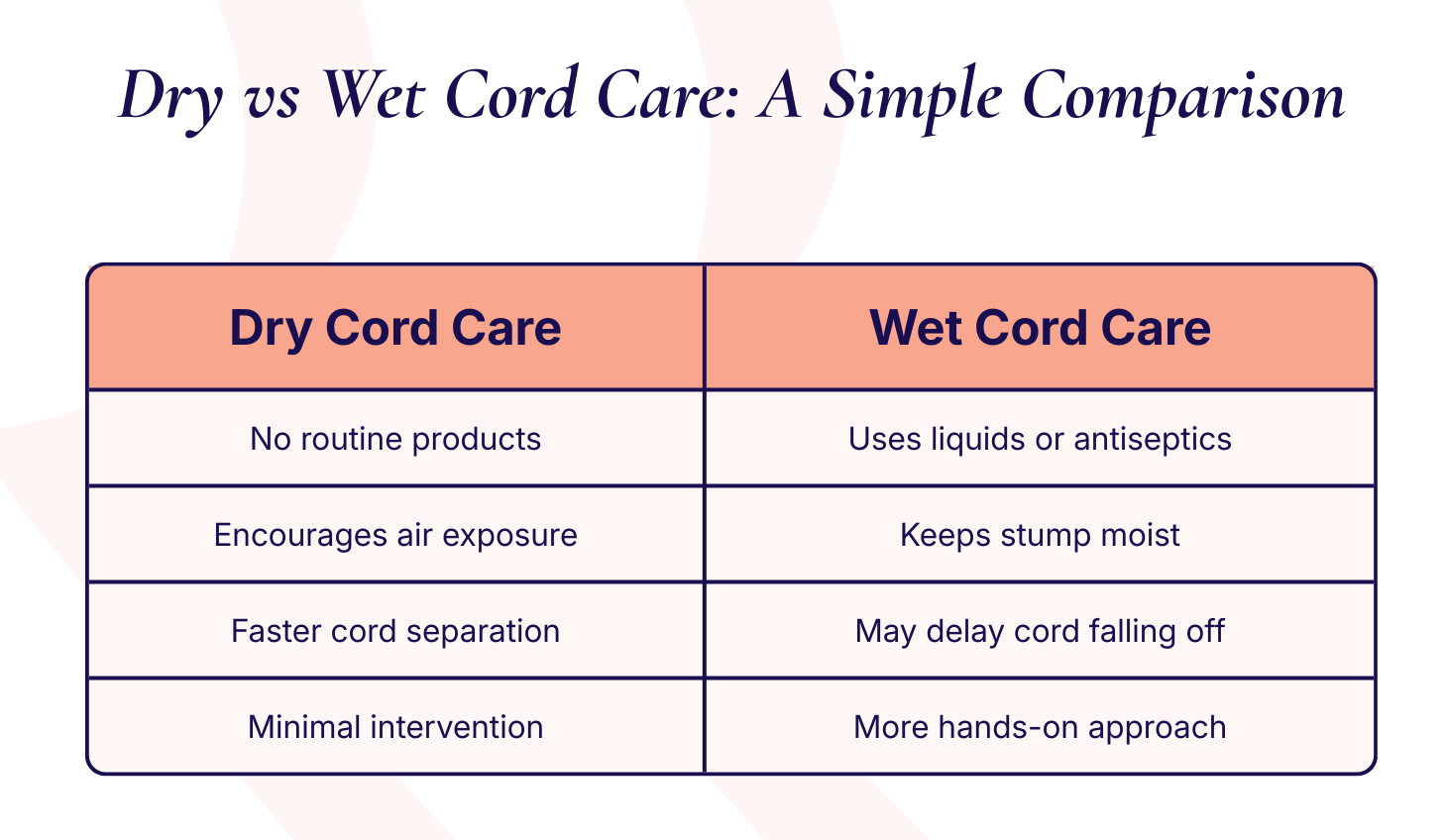
Dry cord care means exactly what it sounds like - keeping the cord clean, dry, and exposed to air as much as possible.
How it works:
No routine application of liquids or antiseptics
Fold nappies down so they don’t rub against the stump
Gently clean with water only if the area becomes dirty, then dry thoroughly
Allow the cord to dry out and fall off naturally
Benefits of dry cord care:
Encourages faster drying and natural separation
Lower risk of irritation from unnecessary products
Simple, low-intervention approach
Supported by many healthcare professionals in low-risk settings
For many healthy, full-term babies, dry cord care is considered safe, effective, and sufficient.
No items found.
What Is Wet Cord Care?
Wet cord care involves applying a substance to the umbilical stump to keep it clean or disinfected.
Common products used include:
Surgical spirits (alcohol) applied with a cotton swab
Alcohol swabs
Antiseptic solutions
Herbal or medicated treatments
When wet cord care may be recommended:
In hospital or high-risk environments
Where hygiene conditions are limited
If a baby is premature or has a higher risk of infection
While wet cord care can help reduce infection in certain contexts, routine use on healthy newborns may delay drying and cord separation.
My Personal Preference (and What I Use)
As a mom, I’ve learned to deeply respect both medical guidance and maternal instinct. With my firstborn, I initially followed what many moms are advised to do and used surgical spirits on a cotton swab for the first week.
What I noticed, though, was that the cord took a while to dry and separate. After switching to dry cord care and using Wecsin (purchased from Dischem) for just two days, the cord dried beautifully and came off naturally.
That experience stayed with me.
This time around, with baby number two, I’ll be doing dry cord care from the start - allowing the cord to air-dry as nature intended, with Wecsin on hand for gentle support if needed.
I believe in allowing the body to do what it was designed to do, without over-treating something that often just needs time, air, and a little trust. As always, what works for one baby may not be right for another and that’s okay.
When to Call Your Healthcare Provider
No matter which method you choose, seek medical advice if you notice:
Redness spreading around the belly button
Swelling or warmth
Pus or foul-smelling discharge
Fever or unusual fussiness
Trust yourself. You know your baby best.
A Gentle Reminder for New Moms
Cord care doesn’t have to be complicated. There is no gold star for doing more. Often, doing less with intention is enough.
Whether you choose dry cord care, wet cord care, or a mindful combination guided by your healthcare provider, the most important thing is that you feel informed, calm, and confident.
You’re doing better than you think.
No items found.
No items found.
Stay on the rise
Get empowering insights, tips, and tools in your inbox each month. No spam, just support.
Thank you! Your submission has been received!
Oops! Something went wrong while submitting the form.



.png)



.png)