Toddler and Baby Proofing Your Home: A Minimalist Safety Guide for Real Life
A practical, minimalist guide to toddler and baby-proofing your home by focusing on real risks rather than excess gadgets. It helps parents create a safer space where little ones can explore freely, daily stress is reduced, and home still feels calm and lived-in.
Toddler-proofing isn’t about bubble-wrapping your house or buying every gadget on the baby aisle. It’s about removing real danger, reducing daily decision fatigue, and creating a home where your toddler can explore safely and where you can exhale. Having to say no and follow closely behind your toddler and baby while they navigate and explore your family living space will affect how positive your motherhood experience is. I really recommend you take a little time to make your space safe so you can enjoy watching them learn about the world around them and feel like the space is their home too.
A minimalist approach to toddler-proofing asks one simple question: “If my child gets into this, could they be seriously hurt?” If the answer is yes, that’s where your attention goes.
Let’s walk through the most important areas of the home, in detail.
Start Low: The Most Dangerous Cupboard in Your Home
The Cleaning Cupboard (Usually Under the Sink)
This is the highest-risk area in most homes.
Under-sink cupboards often store:
Bleach
Dishwasher tablets
Drain cleaner
Degreasers
Ant poison
Laundry pods
Dishwashing liquid
Oven cleaner
Many of these look colourful, smell interesting, and are extremely toxic in small amounts.
Minimalist rule: If it’s toxic, it does not live below toddler height.
What to do instead:
Move all cleaning products to a high cupboard, preferably one that requires a stool for adult access.
If high storage isn’t possible, install a proper internal safety lock (not a loose strap).
Laundry pods should never be stored within reach, even temporarily.
Toddlers learn how to open cupboards long before you think they will.
Medicine Cabinets: Out of Sight, Out of Reach, Out of Mind
Medication accidents are one of the most common causes of emergency visits for young children.
This includes:
Prescription medication
Painkillers
Vitamins
Herbal remedies
Supplements
Teething gels
Adult creams and ointments
Minimalist rule: Medicine is not “locked away” - it is unreachable.
Best practice:
Store all medication in a high, locked cupboard, not a bathroom cabinet or your bedside pedestal drawer.
Do not rely on child-resistant caps as they just slow children down, they don’t stop them.
Never leave medication on a bedside table, kitchen counter, or in your handbag on the floor.
Keep a strict routine: medicine goes away immediately after use.
If guests visit, do a quick scan for handbags and overnight bags - they many contain medication.
The Kitchen: Where Most Accidents Happen
The kitchen is a sensory playground for toddlers - and a danger zone.
Cupboards and Drawers to Secure
Focus only on what’s dangerous:
Knife drawers
Cutlery with sharp edges
Blender blades
Peelers, graters, scissors
Heavy pots and pans
Cleaning supplies (again)
Minimalist approach: Lock the dangerous drawers. Leave the rest alone for exploration
Countertops
Avoid:
Kettles near the edge
Dangling cords
Hot drinks left unattended
Toddlers pull before they walk.
No items found.
Bathrooms: Slippery, Silent, and Risky
Medicines & Products
We’ve covered medicine, but don’t forget:
Makeup
Perfume
Nail polish remover
Hair dye
Razors
Bath Safety
Never leave water in the bath, even briefly.
Use non-slip mats.
Keep the toilet lid closed with a lock.
Living Areas: Furniture Matters
Furniture Anchoring Is Non-Negotiable
Secure:
Bookshelves
Dressers
TV units
Freestanding cupboards
Toddlers climb. Even the ones you swear they “would never”.
Coffee Tables & Hard Edges
Corner protectors can be helpful, especially during the early walking phase. We opted to buy Thomas a protective fabric helmet / ‘baby head protector’ because he was bumping his head on everything – we got ours off Takealot here
Heavy décor items should be removed or moved higher.
Cords and Blinds
Tie up curtain cords.
Avoid looped blind strings entirely.
Secure loose cables behind furniture.
Bedrooms: Safe Sleep, Safe Play
What Doesn’t Belong in a Toddler’s Room
Heaters can be very tricky – choose wisely and put guards up on wall heaters
Loose cords
Heavy frames or mirrors above the bed
Even cameras that are taped on the wall with double-sided tape on can fall onto their little faces when they are snoozing (traumatic memory) – drill them in and get the wire housed in wire trunking (can be found at Builders) which you can easily glue onto the wall with “No More Nails” to secure. The camera must be mounted out of reach because the littles get taller and start playing with the camera and try to pull it down.
Clothing Storage
If your toddler can reach it, they will:
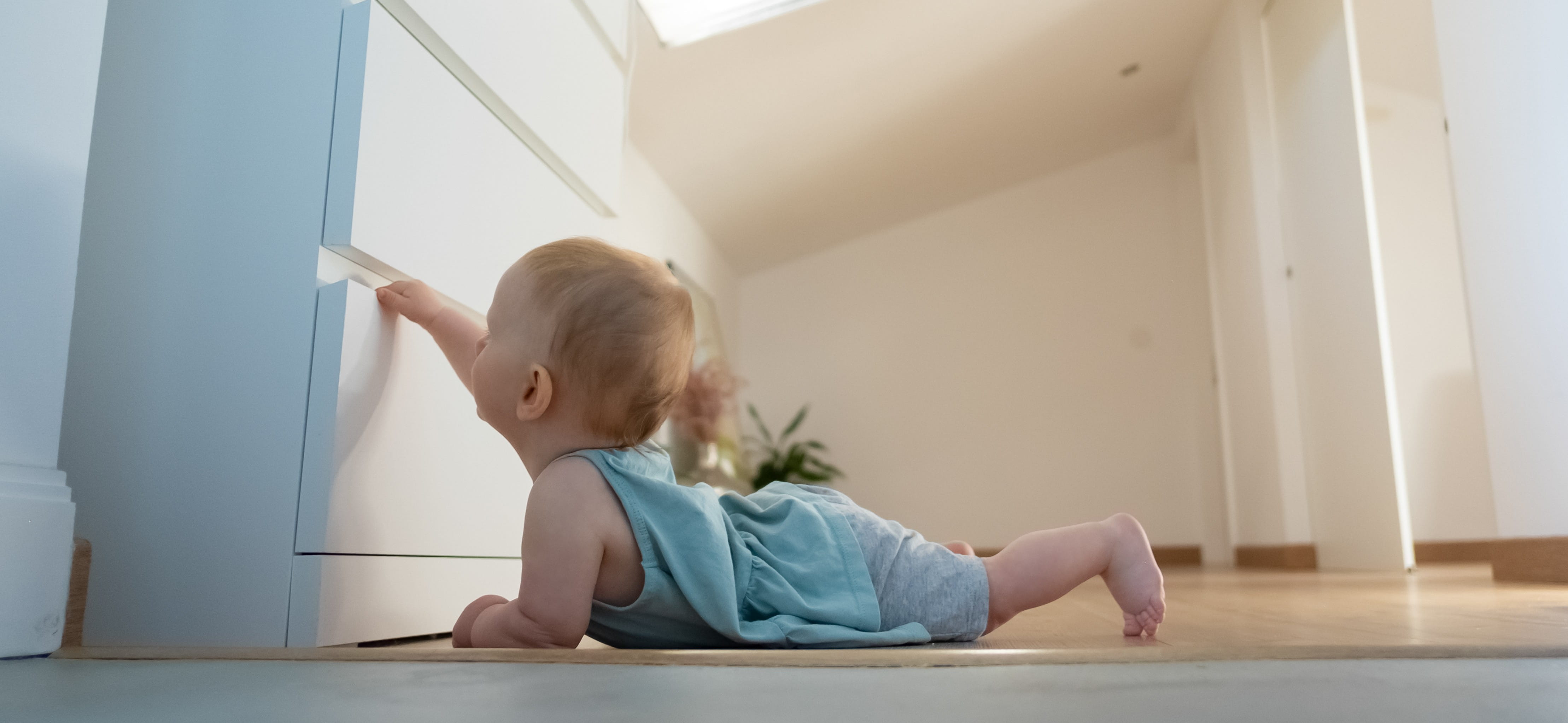
Pull drawers out
Climb them
Tip units forward (sometimes while climbing or using surfaces to hold themselves up)
Anchor all bedroom furniture and avoid stacking storage solutions.
Stairs, Doors & Exits
Install safety gates at the top and bottom of stairs. Please measure wall to wall before you buy your safety gate so you know what width to buy – I have wasted a lot of money on baby gates that didn’t fit. We opted for a metal (push) gate at the top of the stairs and a Noola fabric one for the bottom.
Sliding doors should have locks placed high.
Front and back doors should not be openable by curious hands.
Try remove all keys out of doors so they don’t lock themselves in a room when they learn how to lock and unlock the doors.
If you have a pool, water feature, or balcony – you’ll need to put in a little time to research how to better secure these.
The Hardware Basket / Cupboard: Tiny Hands, Big Trouble
Every home has one: the mysterious basket, cupboard, or drawer where tools, screws, and random hardware accumulate. To a toddler, it looks less like a chore zone and more like a treasure chest of curiosity - and that’s exactly why it’s a danger hotspot.
What Typically Lives Here
Screwdrivers, hammers, pliers
Nails, screws, bolts, and small fixings
Tape measures, glue, and superglue
Batteries (AA, AAA, button batteries!)
Lightbulbs, spare keys, or small hardware gadgets
Yes, batteries are a hidden toddler hazard. Button batteries, in particular, can lodge in the throat or digestive tract, causing severe internal injury within two hours. Even AA or AAA batteries can leak chemicals if chewed.
Minimalist Safety Rules
Move it high: Store the hardware cupboard or basket out of toddler reach. Ideally, anything with small parts or batteries should require a step stool or be on a high shelf.
Use locks or latches: If moving isn’t an option, install a child-proof lock - magnetic locks inside cupboards work well and keep the space tidy.
Small parts in containers: Keep nails, screws, and batteries in sealed containers. Label them clearly to avoid accidental access during adult use.
Never leave tools unattended: Even a small screwdriver can become a projectile in tiny hands.
Batteries = immediate lockup: Any spare or used batteries should never be left loose in drawers or baskets. Store them in a dedicated, closed container high up.
Quick Reality Check
Your toddler doesn’t need to know what a hammer is - they just know it’s fun to grab, bang, or chew. Minimizing access is the only foolproof solution. In a minimalist home, it’s not about covering every surface with gadgets; it’s about moving danger out of reach entirely.
The Minimalist Mindset: Fewer Hazards, Fewer Battles
Toddler and baby-proofing doesn’t mean saying “no” all day. It means designing a home where:
Your toddler can explore freely
You’re not constantly on edge
Dangerous items simply aren’t accessible
If something is: ✔️ Toxic ✔️ Sharp ✔️ Heavy ✔️ Hot
…it belongs up high, locked away, or removed entirely.
This is just a season so if you’re cringing at the thought of what this will do to your beautifully decorated and thoughtfully put together home, you’re not alone. One day when the sliding door glass no longer has grubby little hand marks on it or your ‘super glam’ toy storage no longer exists, you’ll miss it. Live in this chapter fully and embrace it.
No items found.
No items found.
Stay on the rise
Get empowering insights, tips, and tools in your inbox each month. No spam, just support.
Thank you! Your submission has been received!
Oops! Something went wrong while submitting the form.



.png)

.jpg)
%20(1).jpg)

.png)